 Los Altos Sub-Zero Appliance Repair
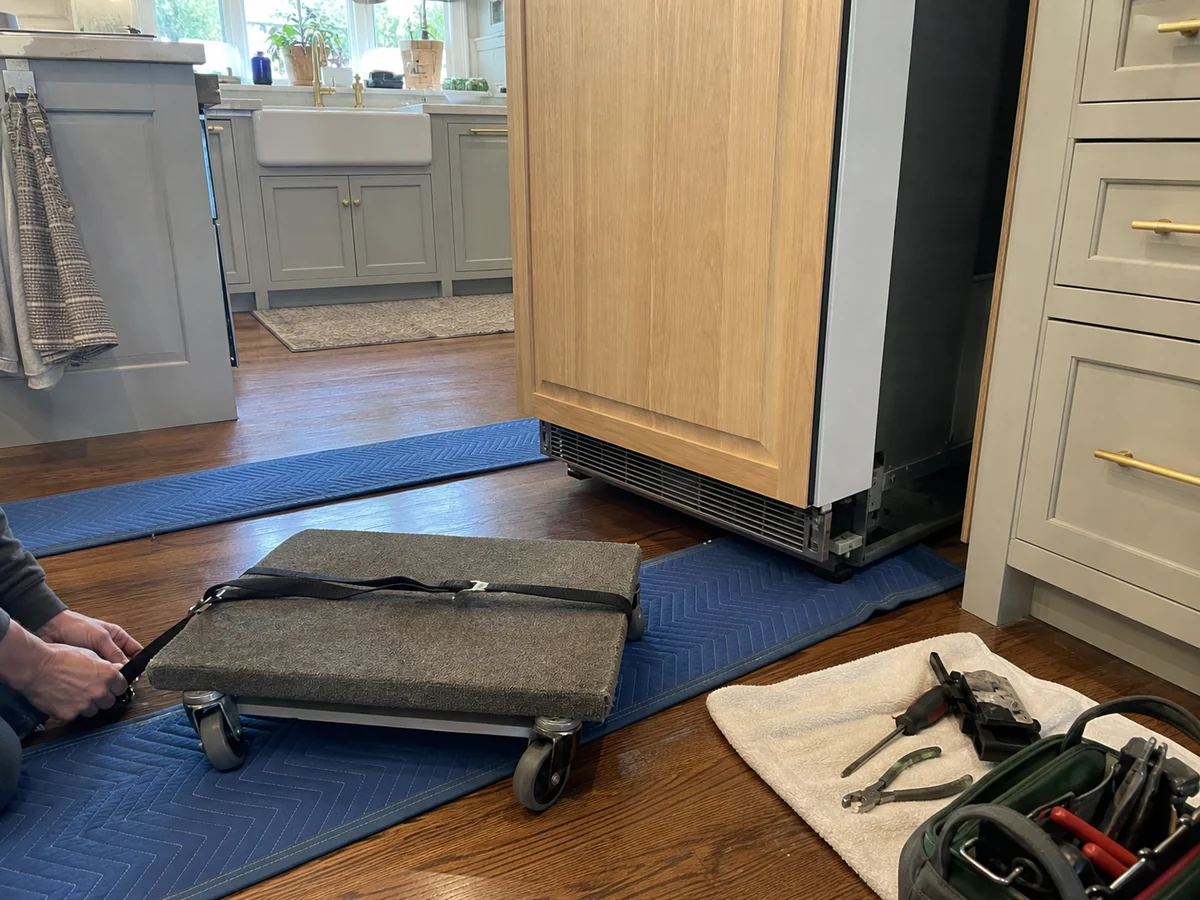
Floor runners went down before anything moved an inch. A slow, careful pull-out reached the rear panel and the worn door gasket was replaced right there. Built-in service done the patient way, with our custom cabinet left completely untouched.
Home / Cabinet-safe service treats the built-in opening as part of the repair
Sub-Zero firstLos AltosTrust and process
Cabinet-safe service treats the built-in opening as part of the repair
A Sub-Zero built-in can be mechanically repairable and still be mishandled if the cabinet, panel, toe-kick, flooring, or water line is ignored. In Los Altos custom kitchens, the diagnostic plan includes access review, floor protection, trim awareness, and a decision about whether the unit actually needs to be moved. This page explains what should be documented before, during, and after cabinet-safe service.
- Access
- Test in place first
- Protection
- Floors, panels, trim
- Documentation
- Invoice and limits
Customer reviews
What Los Altos homeowners say
Eichler with slab flooring and almost no clearance under the toe-kick. They protected the floor, diagnosed it in place, and replaced the condenser fan without damaging a thing. Tidy and genuinely respectful of the kitchen.
Our panel-ready unit was serviced entirely in place. The evaporator fan replacement fixed the warm fresh-food side and they never once disturbed the surrounding cabinetry. Exactly what cabinet-safe should actually mean.
Honest proof
How the work is proven
The trust here is operational: protect the floor, photograph the access condition when needed, verify the model, explain why a pull-out is required, and write the limitation on the estimate. If the unit can be tested in place, that is often better for the cabinetry.
After repair, the invoice should identify the symptom, part path, verification method, and warranty terms. A homeowner should not have to guess what was done inside an expensive built-in.
Pull only when needed
Cabinet-safe workflow
Access review
Look at toe-kick, grille, panels, floor transitions, and water-line route before moving anything.
Non-invasive tests first
Temperature, airflow, condenser, gasket, and display checks can often happen without pulling the unit.
Protection plan
If movement is needed, floor covering, panel awareness, and a clear path are prepared.
Reseat and verify
The unit is returned level, doors are checked, and post-repair readings are documented.
Parts policy
Sub-Zero part categories where serial matching matters
Door gaskets
Profile and magnetic behavior must match the door and serial break.
Evaporator and condenser fans
Airflow, connector, and mounting differences can change by model family.
Control boards and displays
Ordering by appearance risks a mismatch; model and serial are required.
Water valves and ice maker parts
Fill behavior depends on the exact module, valve, and water-line setup.
Sealed-system components
Compressor and refrigerant work requires verified diagnosis and proper equipment.
Field service photos
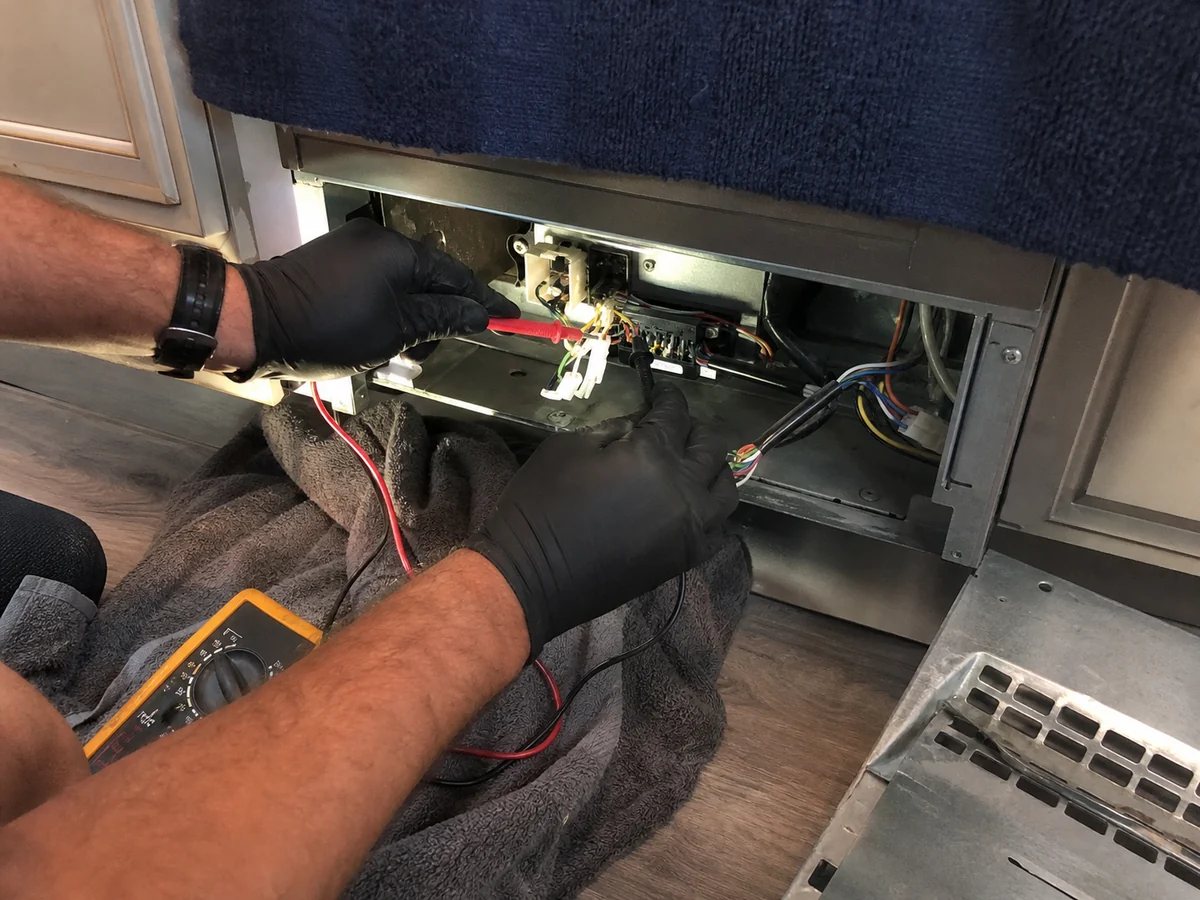
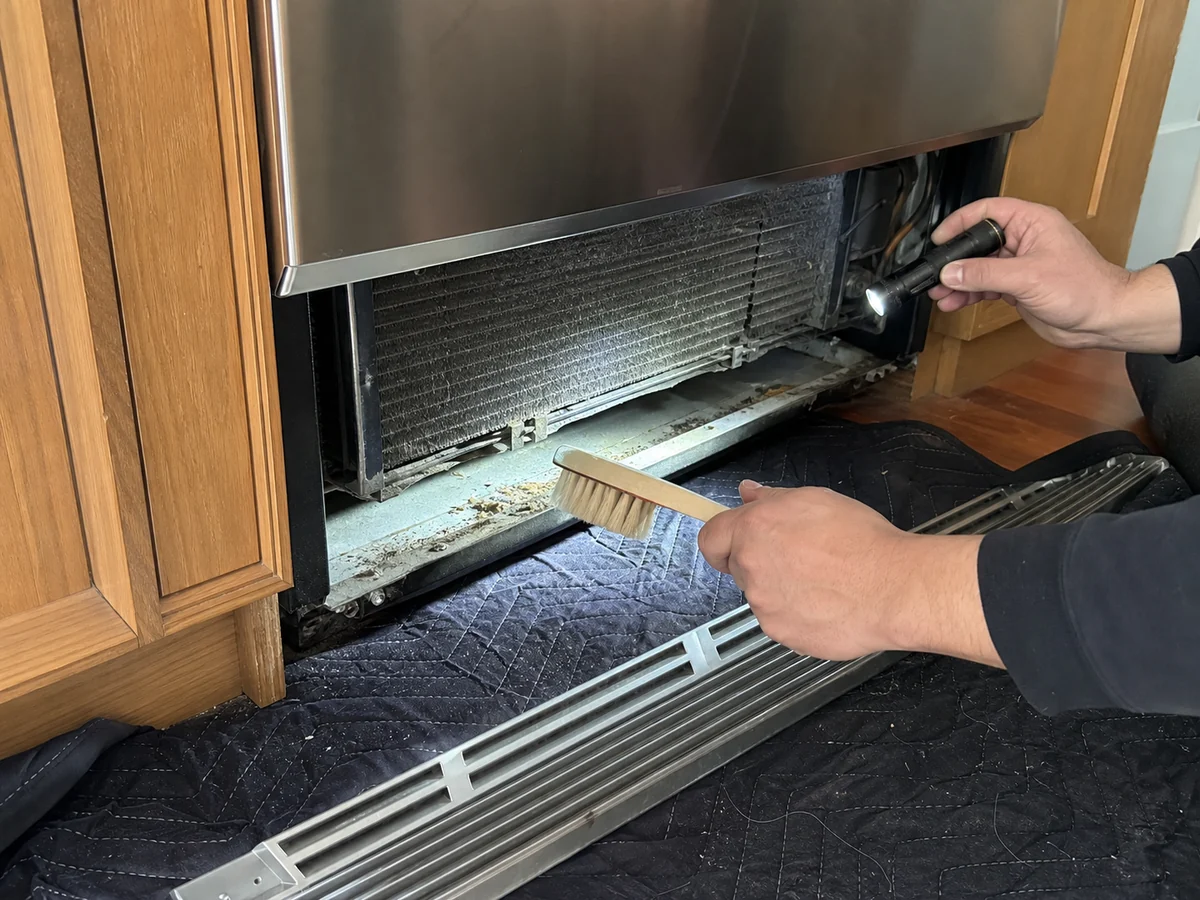
Photo evidence, not decoration
Visible Q&A
Questions this page answers
How much does a protected pull-out cost in a Los Altos custom kitchen?
A cabinet pull-out and reseat adds about $185-$520 and 1-2 hours. It is only used when the unit cannot be diagnosed or repaired in place, and floor protection is included.
Can my Eichler kitchen with slab floors be serviced safely?
Yes. Floor runners and an in-place diagnosis protect slab and finished floors. Many repairs ($295-$950) finish without a full pull-out, and a reseat is verified if the unit is moved.
What does cabinet-safe service include?
A wide cabinet photo, floor protection before any movement, an in-place diagnosis first, and reseat verification of door alignment, panel reveals, and recovery temperature.
Do all Sub-Zero repairs require pulling the unit?
No. Many tests can happen through the grille, interior, or accessible panels. Movement should be justified by the symptom.
Can you protect custom floors?
The appointment includes a protection plan when movement is required. Tell the technician about soft wood, recent refinishing, or fragile transitions.
What should be on the invoice?
The invoice names the symptom, confirmed failure, installed part, verification step, and warranty terms.
Price table
Built-in cabinet-safe service costs in Los Altos
Pricing for protected built-in service in custom Los Altos kitchens. Floor protection and a tested-in-place plan come before any movement.
| Service | What it covers | Price range | Time |
|---|---|---|---|
| Diagnostic (in place) | Tested without moving the unit when possible | $185-$295 | 45-90 min |
| Cabinet pull-out & reseat | Floor runners, level/reseat, slack check | $185-$520 | +1-2 hrs |
| Evaporator / condenser fan motor | Airflow restored | $295-$760 | 1-2 hrs |
| Door gasket / seal | Profile match and seal replacement | $360-$950 | 1-3 hrs |
What sets the final price: whether a pull-out is truly required, plus floor, toe-kick, and panel protection on the way in and out.
Step by step
Cabinet-safe built-in service, step by step
How protected built-in service runs in a custom Los Altos kitchen, from first photo to reseat verification.
- Document the opening. Wide photo of the appliance, panels, toe-kick, and floor before any work.
- Lay floor protection. Put runners and pads down before the unit is touched or moved.
- Diagnose in place. Run temperature, airflow, condenser, and seal checks without a pull-out when possible.
- Pull out only if required. If access demands it, move the unit on protection with the water and electrical slack checked.
- Reseat and verify. Level the unit, confirm panel reveals and door alignment, and document recovery temperatures.
Service facts
Built-in service facts
- Protected built-in service starts with a wide cabinet photo and floor runners before the unit is touched.
- A pull-out and reseat in a custom Los Altos kitchen adds about $185-$520 and 1-2 hours when access demands it.
- Reseat verification confirms door alignment, panel reveals, and recovery temperature before the job closes.
What to expect
What not to guess from this page
Cabinet-safe service treats the built-in opening as part of the repair should not be converted into a parts quote from one sentence. A Los Altos built-in Sub-Zero refrigerator can sit inside older custom millwork, panel-ready doors, floor transitions, and service openings that change labor and risk. The first test is evidence collection: model and serial number, actual temperatures, a wide cabinet photo, a close symptom photo, and a short note about neighborhood access.
The price changes when the model family, serial break, cabinet movement, water-line access, or sealed-system evidence changes. The estimate reflects your specific unit, not a universal parts chart.
Service planning addendum
Model-first addendum for Los Altos service planning
Los Altos Sub-Zero repair starts with the same evidence sequence even when the visible symptom is different: identify the model and serial number, separate the affected compartment, record actual temperatures, photograph the cabinet opening, and preserve the symptom before resets or cleaning erase it. That sequence gives homeowners and service coordinators a practical method instead of a vague repair-shop promise.
The first test is different by symptom. A warm fresh-food side points first to airflow, evaporator fan, defrost, thermistor, gasket, and cabinet ventilation. A frost line points first to gasket profile, hinge or panel alignment, and cabinet interference. Hollow cubes point first to freezer temperature, fill tube, inlet valve, filter, and water pressure. A display alarm points first to actual temperatures, door events, sensor readings, and model-specific control logic. A suspected compressor or sealed-system failure is the high-cost exception and belongs after basic evidence is documented.
| Evidence to collect | Why it changes the quote | Related hub |
|---|---|---|
| Model and serial number | Serial breaks can change gaskets, boards, fans, valves, sensors, and sealed-system parts. | Model-first diagnostic |
| Actual compartment temperatures | Fresh-food warm/freezer cold is a different path from both compartments warm. | Not-cooling hub |
| Wide cabinet photo | Panel-ready doors, floor transitions, toe-kicks, and trim change access and labor. | Cabinet-safe hub |
| Close symptom photo | Frost, alarm, hollow ice, condenser dust, or water clues prevent generic parts guesses. | Cost hub |
| Neighborhood and access notes | Old Los Altos, North Los Altos, Country Club, Loyola Corners, Woodland Acres, Highlands, and South of El Monte have different route and access constraints. | Route notes |
Use this addendum as the cross-check before quoting. If the page topic is Cabinet-safe service treats the built-in opening as part of the repair, the answer should still explain what evidence is missing, what can be tested safely, what should not be promised by phone, and where the final quote depends on model/access/part proof.