 Los Altos Sub-Zero Appliance Repair
Our 632 ran constantly but would not recover below 45°F. They confirmed a refrigerant leak with gauges, repaired and recharged the sealed system, and showed me the recovery curve afterward. No guessing on an expensive repair.
Home / Sealed-system suspicion is the expensive path, so it needs verification
Sub-Zero firstLos AltosTechnical sealed-system page
Sealed-system suspicion is the expensive path, so it needs verification
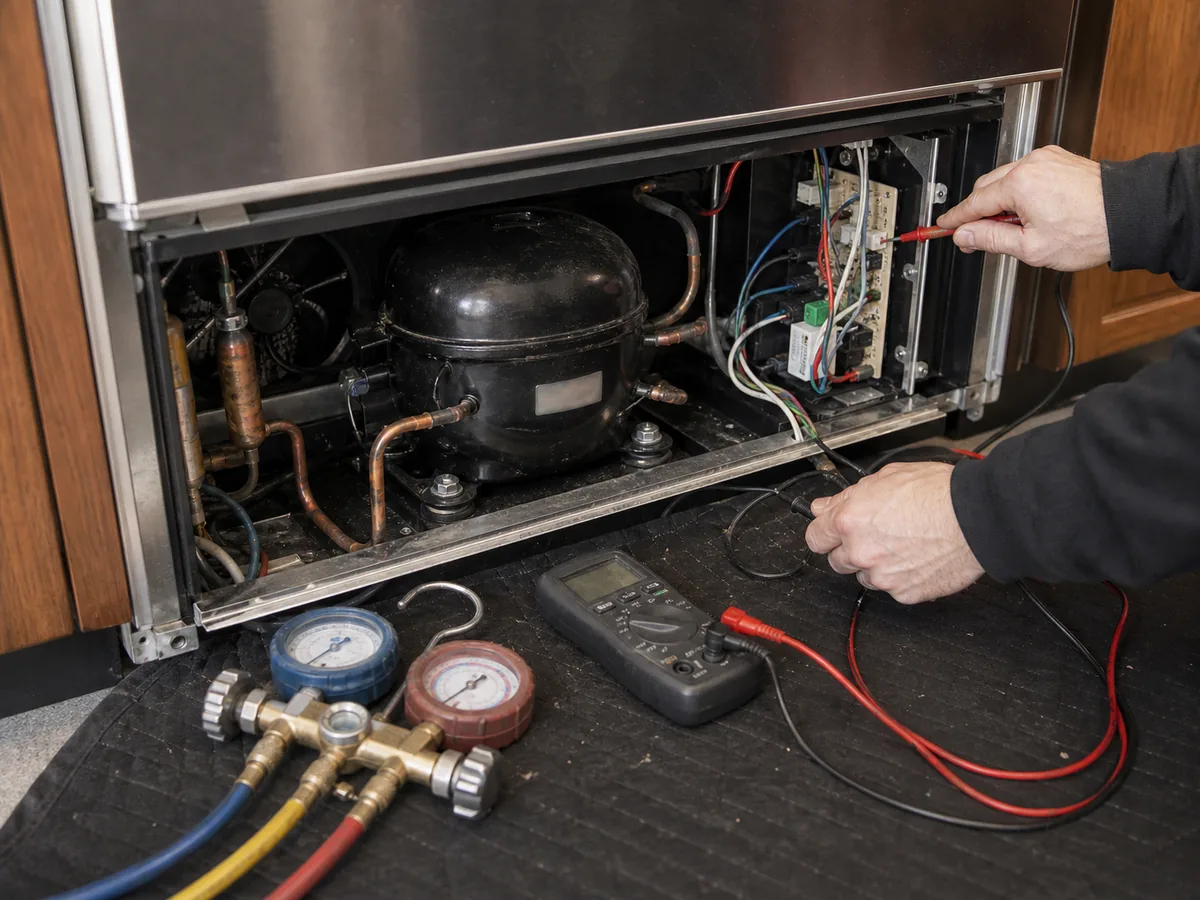
A warm Sub-Zero does not automatically need a compressor. Sealed-system and refrigerant work is the expensive, tool-sensitive path and should follow basic airflow, fan, defrost, door seal, sensor, and control checks. In Los Altos built-ins, the technician must also consider cabinet access and whether the unit can be moved safely before quoting compressor or leak work.
- Safety
- EPA-sensitive
- Before sealed
- Airflow, fan, seal, defrost
- Decision
- Repair vs replace
Does my warm Sub-Zero in Los Altos really need a compressor or sealed-system repair?
Not until it is proven. Los Altos Sub-Zero Appliance Repair cleans and rechecks the condenser, then confirms a refrigerant leak with gauges and electrical tests before quoting compressor work for South of El Monte homes in 94024. Get verified Los Altos answers first by calling (650) 668-1043.
Customer reviews
What Los Altos homeowners say
A failed compressor on our BI-48, verified with pressure and electrical tests rather than assumed. The replacement included a new drier and recharge, and the recovery readings afterward gave us real confidence it was done right.
Heavy summer heat load and poor recovery had us worried about the whole unit. They ruled out airflow first, found a small refrigerant leak, and the sealed-system repair and recharge fixed it. The unit has held temperature ever since.
Do not DIY sealed work
Safety warning
Homeowners can record temperatures, photograph the model tag, and note whether the compressor appears to run constantly. They should not add refrigerant, tap sealed lines, bypass electrical controls, or open service compartments. Refrigerant handling, leak checks, compressor testing, and recovery work require trained service procedures and the right equipment. That work is also certified-only territory under federal rules, and our guide shows how to check a technician's EPA 608 card before the gauges come out.
Verification before quote
Sealed-system diagnostic table
| Symptom | Possible component | Confirmation test | False positive to avoid | Repair path |
|---|---|---|---|---|
| Both compartments warm | Compressor, leak, condenser fan, control | Current draw, pressures, airflow | Skipping condenser airflow | Basic checks before sealed quote |
| Fresh-food warm only | Evaporator fan, defrost, sensor | Frost pattern and fan test | Calling it compressor too early | Repair zone-specific cause |
| Poor recovery after cleaning | Low charge or weak compressor | EPA-sensitive sealed verification | Adding refrigerant without leak proof | Leak/comp diagnostics |
| Short cycling | Relay/control/compressor issue | Electrical test and run behavior | Replacing board by guess | Verify electrical path |
| Oil or residue near tubing | Possible leak indicator | Leak inspection with proper tools | Assuming every stain is refrigerant | Confirm before quote |
| No compressor start | Start device, board, compressor | Voltage and start test | Condemning compressor without start check | Replace verified component |
| Repeated sealed failure | System contamination or leak | Repair history and pressure behavior | Ignoring replacement economics | Repair-vs-replace review |
Verify by serial
Model-specific notes
Classic and BI
Age, access, and prior sealed work matter. A temperature recovery test should close the repair.
700 Series
Cabinet integration can make access and part sourcing more sensitive.
Designer columns
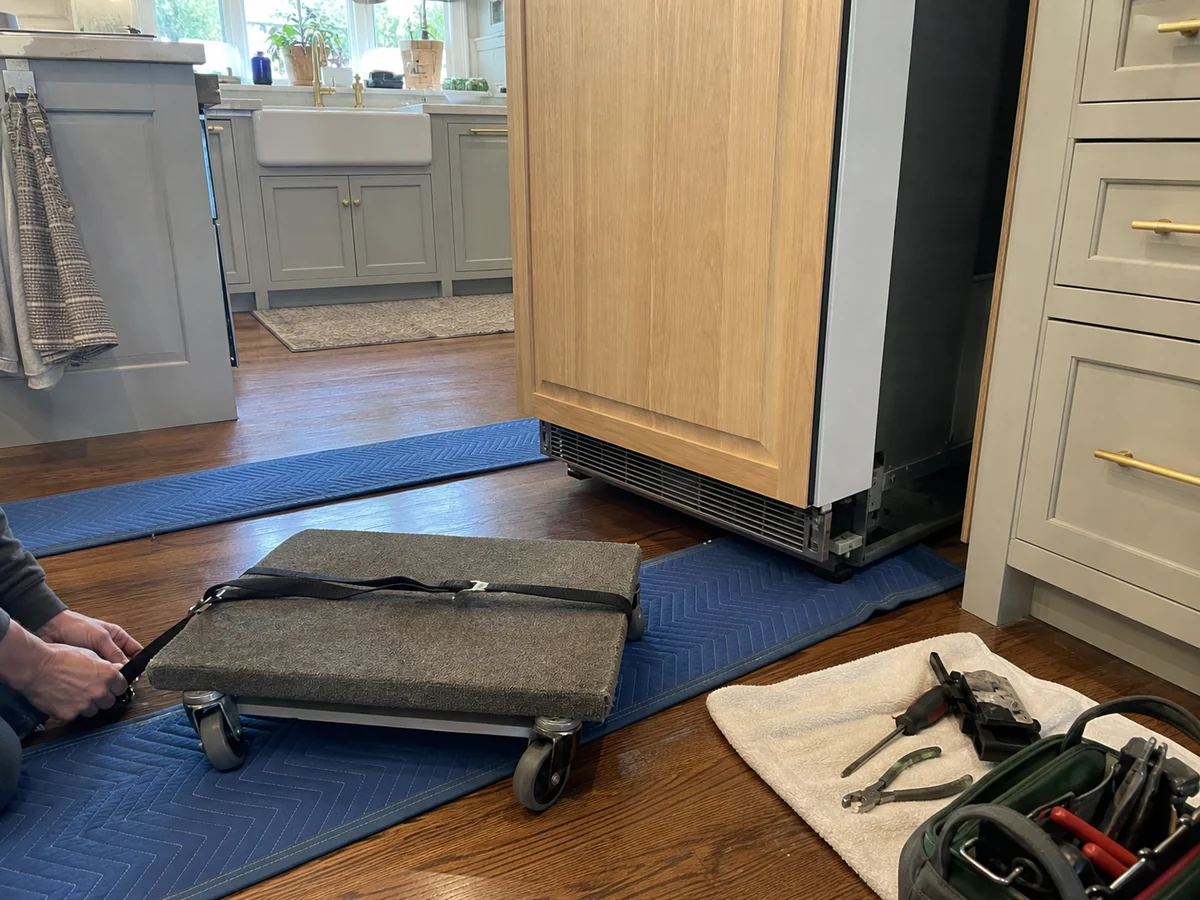
Panel-ready openings require careful movement planning if sealed access is needed.
PRO units
Large compartments and heavy doors change staging, protection, and time on site.
Owner approval
Approval checklist before major sealed-system work
Before approving compressor or sealed-system work, the homeowner should see the basic causes that were ruled out: condenser airflow, condenser fan operation, evaporator fan operation where relevant, door sealing, defrost behavior, control readings, and model-specific access constraints. The quote should state whether leak verification was performed, what refrigerant-sensitive work is expected, whether the unit must be moved from the cabinet, and how recovery will be verified after repair.
This checklist is especially important in Los Altos because the replacement alternative may involve cabinet panels, opening dimensions, and delivery access. A sealed-system quote without a repair-vs-replace comparison leaves too much hidden risk for a built-in appliance.
Close-out proof
What a finished sealed-system file should contain
The close-out should include the confirmed failure, installed component, refrigerant-sensitive work performed, temperature recovery evidence, and any limits that remain. If the repair depends on a future temperature trend, that should be written plainly instead of treated as a silent assumption.
Manual-style proof
Evidence photos
Visible Q&A
Questions this page answers
How much does Sub-Zero sealed-system repair cost in Los Altos?
Leak repair and recharge runs about $1,800-$3,200, and compressor replacement $2,400-$4,800. Both are quoted only after verified leak, pressure, and electrical evidence.
Can Los Altos summer heat cause cooling problems that look like a sealed-system failure?
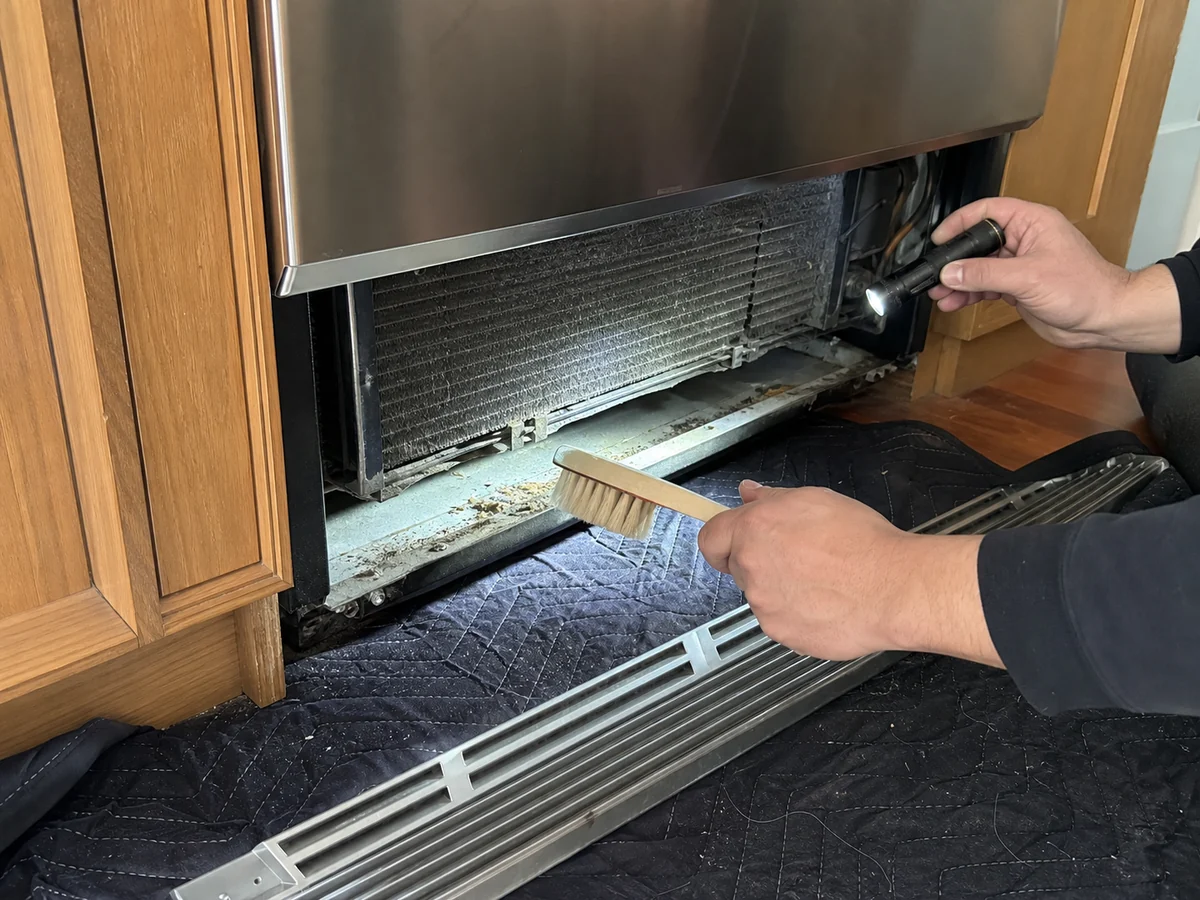
Yes. A dust-choked condenser under summer heat load mimics a weak compressor, so the coil is cleaned ($185-$420) and rechecked before any sealed-system conclusion.
Is a compressor replacement worth it on an older built-in?
Sometimes. A $2,400-$4,800 compressor can beat an $8,500-$18,000 replacement when the cabinet is sound and parts are available, but repeated sealed failures favor replacement.
Does a constantly running compressor mean it is bad?
No. A dirty condenser, fan problem, door leak, defrost issue, or control reading can create long run time.
Can refrigerant be added as a quick fix?
Refrigerant work should follow proper leak and system verification. Adding refrigerant without proof can mask the real failure.
When should replacement be discussed?
When sealed-system findings, age, part availability, and cabinet disruption make the repair poor value.
Price table
Sealed-system and compressor repair costs in Los Altos
Sealed-system work is the expensive exception and should follow airflow and electrical tests. These ranges cover leak repair, recharge, and compressor replacement.
| Service | What it covers | Price range | Time |
|---|---|---|---|
| Diagnostic visit | Airflow, electrical, and recovery readings | $185-$295 | 45-90 min |
| Condenser cleaning & airflow (rule-out) | Clears dust load before sealed-system work | $185-$420 | 1-2 hrs |
| Sealed-system leak & recharge | Leak locate, repair, evacuate, recharge | $1,800-$3,200 | 3-6 hrs |
| Compressor replacement | Compressor, drier, and recharge | $2,400-$4,800 | 4-8 hrs |
What sets the final price: leak versus compressor evidence, refrigerant type, summer heat load on the condenser, and verified recovery after the work.
Step by step
What to record before a sealed-system visit
Sealed-system work is the costly exception, so it should follow evidence. Capture these before approving any major quote.
- Log recovery behavior. Note how warm the cabinet gets and whether it ever recovers, in °F over time.
- Watch run time. Record whether the compressor runs constantly or short-cycles.
- Clean and recheck the condenser. Rule out a dust-choked coil and heat load before any sealed-system conclusion.
- Capture the model and serial. Refrigerant type and parts depend on the exact model and serial break.
- Require verified evidence. Ask for leak, pressure, and electrical proof before approving leak repair or a compressor.
Service facts
Sealed-system facts
- Sealed-system leak and recharge work in Los Altos runs about $1,800-$3,200; compressor replacement runs $2,400-$4,800.
- Summer heat load on a dirty condenser can imitate a sealed-system failure, so the coil is cleaned and rechecked first.
- Leak, pressure, and electrical evidence plus verified recovery should be documented before approving major work.
What to expect
What not to guess from this page
Sealed-system suspicion is the expensive path, so it needs verification should not be converted into a parts quote from one sentence. A Los Altos built-in Sub-Zero refrigerator can sit inside older custom millwork, panel-ready doors, floor transitions, and service openings that change labor and risk. The first test is evidence collection: model and serial number, actual temperatures, a wide cabinet photo, a close symptom photo, and a short note about neighborhood access.
The price changes when the model family, serial break, cabinet movement, water-line access, or sealed-system evidence changes. The estimate reflects your specific unit, not a universal parts chart.
Service planning addendum
Model-first addendum for Los Altos service planning
Los Altos Sub-Zero repair starts with the same evidence sequence even when the visible symptom is different: identify the model and serial number, separate the affected compartment, record actual temperatures, photograph the cabinet opening, and preserve the symptom before resets or cleaning erase it. That sequence gives homeowners and service coordinators a practical method instead of a vague repair-shop promise.
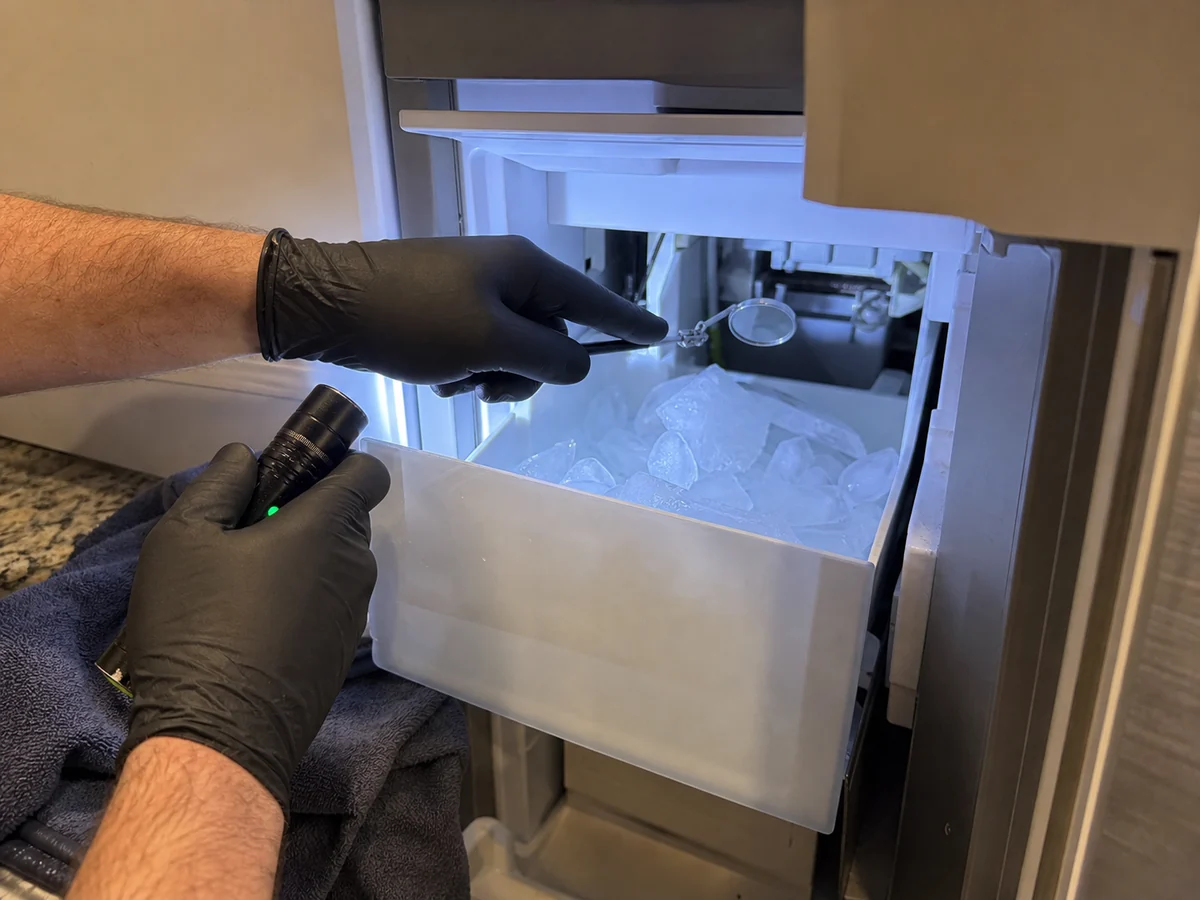
The first test is different by symptom. A warm fresh-food side points first to airflow, evaporator fan, defrost, thermistor, gasket, and cabinet ventilation. A frost line points first to gasket profile, hinge or panel alignment, and cabinet interference. Hollow cubes point first to freezer temperature, fill tube, inlet valve, filter, and water pressure. A display alarm points first to actual temperatures, door events, sensor readings, and model-specific control logic. A suspected compressor or sealed-system failure is the high-cost exception and belongs after basic evidence is documented.
| Evidence to collect | Why it changes the quote | Related hub |
|---|---|---|
| Model and serial number | Serial breaks can change gaskets, boards, fans, valves, sensors, and sealed-system parts. | Model-first diagnostic |
| Actual compartment temperatures | Fresh-food warm/freezer cold is a different path from both compartments warm. | Not-cooling hub |
| Wide cabinet photo | Panel-ready doors, floor transitions, toe-kicks, and trim change access and labor. | Cabinet-safe hub |
| Close symptom photo | Frost, alarm, hollow ice, condenser dust, or water clues prevent generic parts guesses. | Cost hub |
| Neighborhood and access notes | Old Los Altos, North Los Altos, Country Club, Loyola Corners, Woodland Acres, Highlands, and South of El Monte have different route and access constraints. | Route notes |
Use this addendum as the cross-check before quoting. If the page topic is Sealed-system suspicion is the expensive path, so it needs verification, the answer should still explain what evidence is missing, what can be tested safely, what should not be promised by phone, and where the final quote depends on model/access/part proof.
Related reading
Worth a look before you book in Los Altos
- Repair or replace a Sub-Zero built-in - run the economics before approving repeated sealed-system work.
- Board clue or sealed-system clue - the comparison that keeps a control fault from being quoted as a compressor.
- Split a not-cooling symptom by compartment - the triage that belongs before any sealed-system conversation.