 Los Altos Sub-Zero Appliance Repair
Reference · Los Altos
What your Sub-Zero model number means — a Los Altos decoder
Finding the tag is half the job; reading it is the other half. The letters and numbers on a Sub-Zero plate tell a technician which platform you own, which board and airflow design it uses, and which parts will actually fit — long before anyone opens the cabinet in your Los Altos kitchen.
4.9/5 · 1,478 verified customer reviews
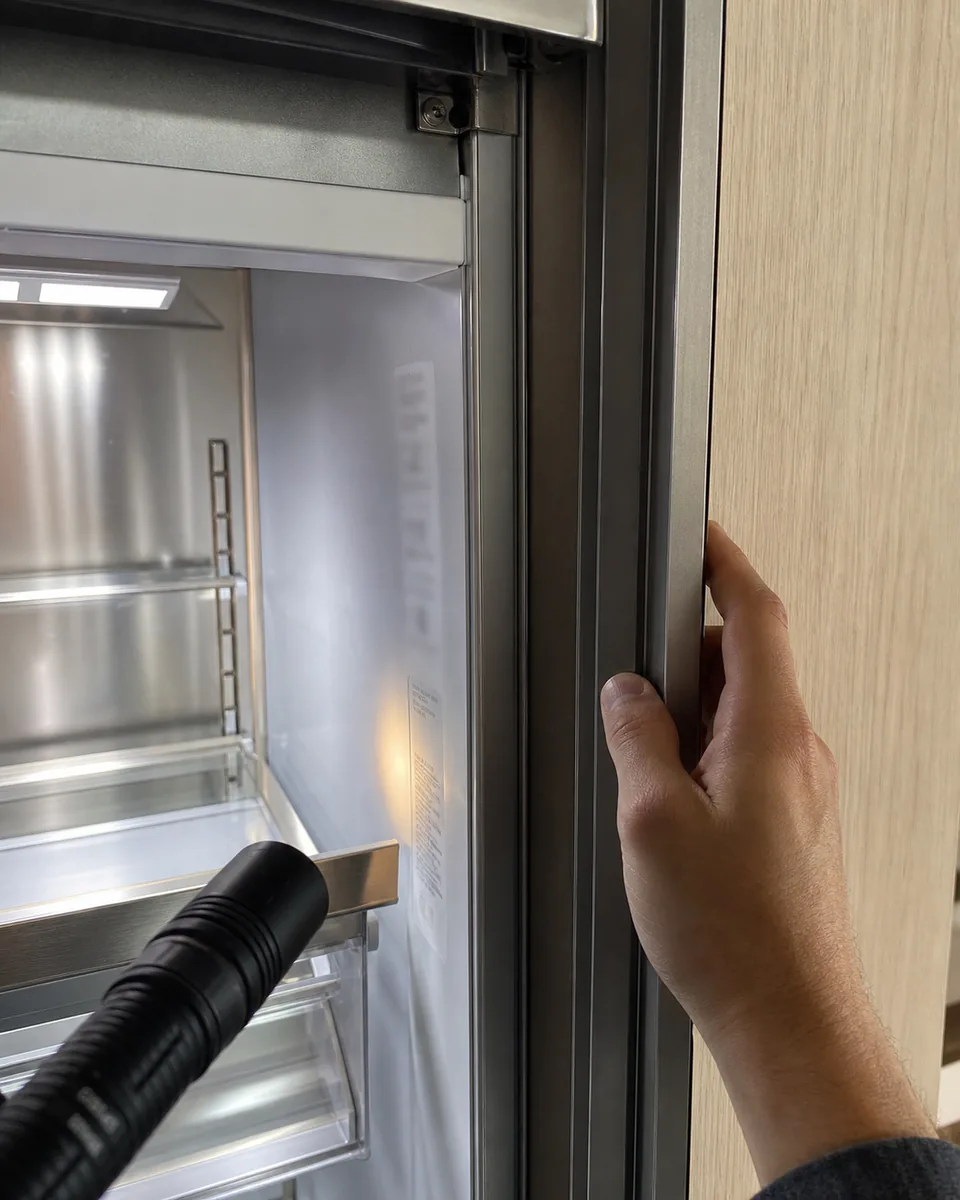
Los Altos has an unusually wide spread of Sub-Zero hardware, and that spread is exactly why the model number matters more here than in a tract of identical kitchens. Walk three streets in town and you will find three different eras of the brand: a 1960s Eichler near the Highlands with a slim integrated column hidden behind a flat-panel door, a 1990s Old Los Altos remodel still running a flush 648 built-in, and a newer Hills estate with a PRO 48 standing next to a Wolf range. Each of those is a different machine wearing a similar stainless face, and the only honest way to tell them apart is the plate.
On a freestanding appliance the model number is a convenience. On a Sub-Zero built-in it is the whole repair plan. These units are engineered as platforms — the board logic, the evaporator layout, the fan, the gasket profile and the defrost scheme all change from one family to the next, and they change again across the serial break within a single family. Get the string right and the technician arrives with the part in the van. Get it half-right and you have paid for a return trip you did not need.
The prefix legend
Reading the letters: which platform you own
The leading characters are the most useful thing on the tag. They name the platform, and the platform sets the parts. Here is what each one tells us when it lands on a Los Altos service ticket.
| Prefix you see | Platform | What it means here |
|---|---|---|
| BI-36 · BI-42 · BI-48 | Built-in over-under | Panel-ready fridge-over-freezer that sits flush in cabinetry. The most common built-in across North Los Altos and the Country Club remodels. |
| 600 · 648 · 685 | Classic built-in (legacy) | The older flush built-ins still running in Old Los Altos kitchens that have never been gutted. Parts split hard at the serial break here. |
| IC · ID · IW | 7-series integrated | Integrated columns (IC), integrated drawers (ID) and integrated wine (IW) that disappear behind a custom door front — the look most Eichler atrium remodels chase. |
| IT-30 · IT-36 | All-refrigerator / all-freezer | Single-purpose columns paired side by side. A warm IT freezer column is a different fault path than a warm fridge column. |
| UC-15 · UC-24 | Undercounter | Beverage, drawer and ice units tucked into an island or a butler's pantry. Loyola Corners and the Hills bar areas run these hard. |
| PRO 48 · PRO 36 | PRO refrigeration | The wide stainless statement units, often paired with a Wolf range in larger Los Altos Hills estate kitchens. |
| WS · 424 | Wine storage | Dual-zone wine columns and the older 424 cellars. Stability matters more than raw cold here, so the part call is sensor-and-airflow first. |
Two letters at the front change the entire part list. If you are not sure where the tag hides on your unit, the Sub-Zero model number location guide walks through it by cabinet type.
After the dash
The numbers, the suffix, and the serial date tag
Once the prefix tells us the family, the number after it is mostly width and configuration: a 36 is a thirty-six-inch cabinet, a 48 a forty-eight, and a trailing letter such as G, S or FH narrows it to a glass door, a stainless door, or a French-door layout. That suffix is not cosmetic to a repair. A French-door BI takes different hinges and a different gasket run than the same-width single-door version, and the wrong one simply will not seal against the dry Los Altos air.
The second line on the plate is the serial, and it carries a build date. That date does two jobs. First, it places your unit on the right side of the serial break, so the evaporator fan, thermistor or board we bring is the revision your cabinet actually uses. Second, it gives an honest read on age — a built-in from the early 2000s facing a compressor job is a very different conversation than a five-year-old column needing a fan, and we would rather show you that math than sell you a repair the numbers do not support.
Series to symptom
What each platform tends to need
The model number also hints at where a fault is likely to land, because each platform stresses different parts. None of this replaces a real diagnosis, but it explains why we ask for the tag first.
| If your tag reads… | The fault we most often find |
|---|---|
| 600 / 648 / 685 legacy built-in | Dual-condensate and defrost age out; gasket hardening from low humidity is near-universal on these older Old Los Altos units. |
| BI over-under | Evaporator fan and defrost faults that read as a warm fresh-food side while the freezer holds. |
| IC / IT columns | Single-zone columns fail as one warm box — a warm freezer column points to the freezer-not-freezing path, not the fridge one. |
| UC undercounter | Ice and water faults from local hard-water scale; see ice maker and water-line repair. |
| WS / IW / 424 wine | Sensor drift, evaporator fan and gasket — stability faults a collector hears as a buzz or rattle before the display admits a problem. |
Next step
Find your tag, then send the photo
If you have not located the plate yet, start with the model number location guide — it shows the exact spot for built-ins, columns, undercounter and wine units. Once you can read the full model and serial, a single clear photo lets us match parts to your platform and serial break before the visit, which is how most Los Altos repairs finish in one trip. From there you can compare paths on the repair cost page or book straight away.
FAQ
Sub-Zero model number questions
Where do I actually read the Sub-Zero model number?
The model and serial tag sits on an interior side wall, the door frame, or behind the lower grille depending on the unit. Our companion page, the Sub-Zero model number location guide, shows the exact spot by unit type. Photograph the whole string before you call.
Why does a one or two letter prefix change my Los Altos repair?
The prefix tells the technician the platform — built-in, integrated column, undercounter, PRO or wine — which determines the airflow design, the board family, and which gaskets, fans and sensors fit. A BI-36 and a 648 can look similar in a cabinet and take completely different parts.
What is the serial break and why does it matter?
Sub-Zero revises components mid-production, so two units with the same model number can need different parts depending on where the serial falls. On the legacy 600-series units common in Old Los Altos, the serial break is the difference between a part that drops in and a wasted second trip.
Do the numbers tell me how old my unit is?
The serial encodes a build date, which helps gauge whether an older built-in is worth a major sealed-system repair or whether replacement makes more sense. We read that against the actual condition before advising either way.
Can you identify the part from a photo of the tag?
Usually yes. A sharp, straight-on photo of the model and serial lets us pre-stock the likely parts so most Los Altos visits finish in one diagnostic trip plus the confirmed part.