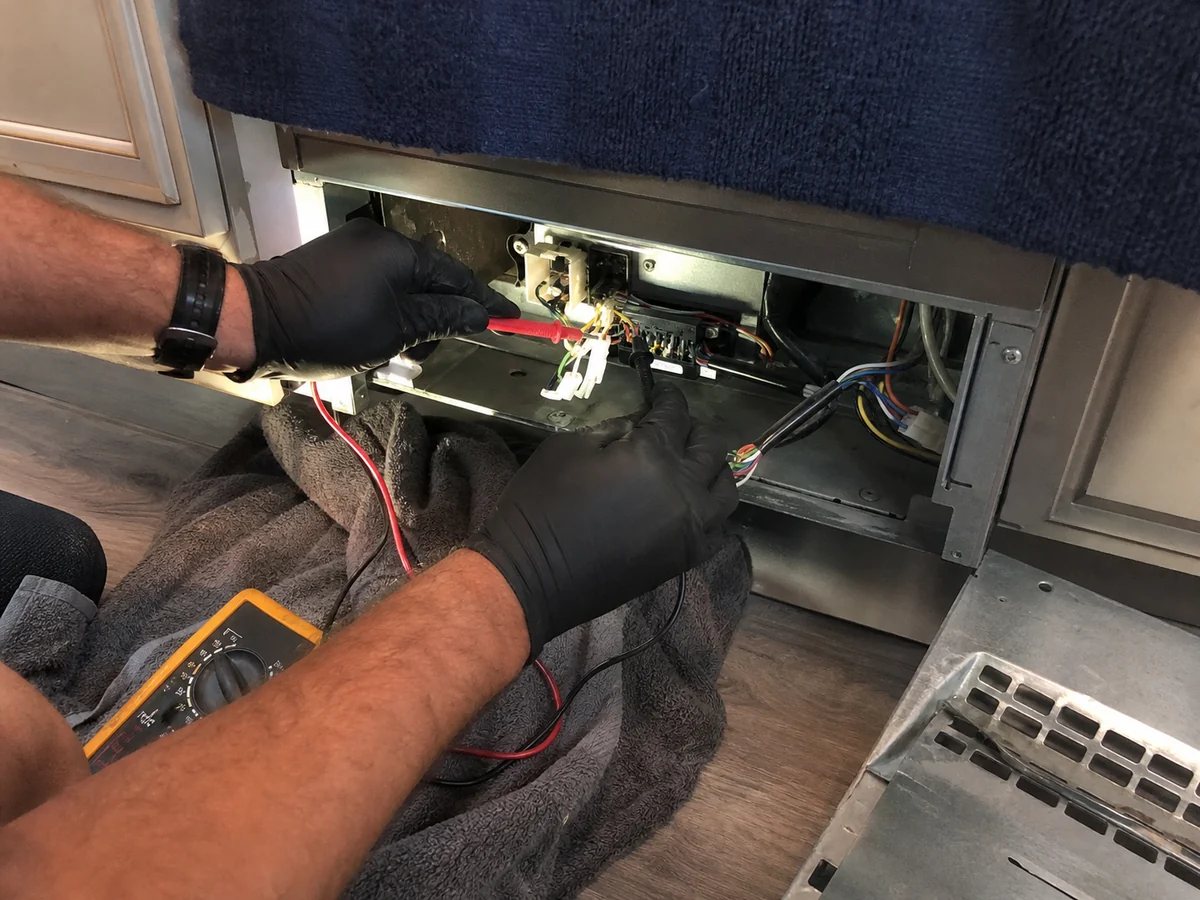
Sub-Zero leaking water onto the floor — what it really is
Water under a built-in is rarely the refrigerant or the compressor. In a Los Altos kitchen it is almost always one of four things: a frozen or clogged defrost drain, an ice-maker fill tube or inlet valve, a weeping filter housing, or condensation from a gasket the dry valley air has hardened. The trick is telling which before the hardwood pays for it.
A leaking Sub-Zero is one of the few faults where the appliance is the second-most-expensive thing in the room. The first is the floor it is standing on. Los Altos kitchens lean heavily on wide-plank hardwood, engineered wood and custom cabinetry, and a built-in that weeps quietly overnight can cup a board or swell a toe-kick before anyone notices the puddle. On the 1950s and 1960s Eichlers around the Highlands and Sylvan Park, the problem hides differently: those homes sit on concrete slabs with radiant lines, so a slow leak spreads sideways under the cabinet and surfaces away from the fridge instead of in front of it. Either way, the fastest repair is the one that finds the source before the water finds the structure.
So we work the problem in order, and the order is what keeps it cheap. Water that pools inside the fresh-food compartment is a drain story. Water that appears under or behind the unit is a supply story. Water that comes and goes with the weather is usually a seal story. Naming which of those three you have is most of the diagnosis.
The four sources
Where the water actually comes from
Frozen or clogged defrost drain
Every built-in melts a little frost during each defrost cycle and routes it down a drain trough to evaporate. When that trough clogs with debris or freezes into an ice plug, the melt water has nowhere to go and spills over the edge — pooling under the crisper drawers and then onto the floor. This is the leak we find most often, and clearing it is the least expensive fix on the list.
Ice-maker fill tube & inlet valve
A split fill tube or a valve that no longer seats lets water escape the supply path. Because these weep rather than gush, the water can run along the cabinet base and surface elsewhere. This page's sibling, ice maker and water-line repair, covers the supply side in depth — the two share a water path and cross-feed.
Water filter housing
The filter head and its O-rings can weep after a cartridge change or as the seal ages, dripping inside the cabinet or down behind it. It is a small part with an outsized nuisance, and it is easy to mistake for a drain problem until the housing is inspected directly.
Condensation from a tired gasket
A door gasket hardened by the dry Los Altos air stops sealing cleanly, warm room air slips in, and it condenses on the cold interior. That moisture drips and reads as a leak. We always confirm the gasket before condemning a part, because replacing a drain pump for a seal problem fixes nothing.
DIY vs. the tech
What you can check, and what we check
You can do the first, floor-saving steps yourself: shut the water off if the leak is on the ice or water side, set down a towel and a tray, and note where the water actually sits so you can describe it. Beyond that, a built-in leak rewards a real diagnosis. We pull the unit on floor protection, read the defrost drain and trough directly, pressure-check the supply side, inspect the filter head, and test the gasket seal with the door under load — rather than guessing from the puddle. On the slab-floor Eichlers we pay special attention to where the water tracks, because the surfacing point can be a yard from the source.
Step by step
Trace it before it reaches the floor
Shut the water off first. If water is pooling, close the saddle valve or shutoff feeding the fridge before anything else. On an island or pantry install you may have to trace the line; stopping the supply protects the floor while you diagnose.
Find where the water actually sits. Note whether it pools inside the fresh-food compartment, runs from under the unit, or shows up several feet away. Interior water points to the defrost drain; under-cabinet water points to the supply side.
Check the defrost drain trough. A drain trough clogged with debris or frozen into an ice plug sends melt water over the edge instead of down the line. This is the single most common interior leak on a built-in.
Inspect the ice-maker fill tube and inlet valve. A split fill tube, a leaking inlet valve, or a weeping filter housing drips on the supply side. These weep slowly, so the water can travel before you ever see it.
Look at the door gasket and condensation. A hardened gasket lets humid room air in, and the condensation it creates can mimic a leak. We confirm the seal before condemning a part.
Repair or replace
When a leak is worth fixing
Nearly every leak we see in Los Altos is worth repairing: a cleared drain, a fill tube, an inlet valve, a filter head or a gasket restores a sound unit for a fraction of replacing a built-in that is plumbed and finished into the cabinetry. The exception is an old unit where the leak is a symptom of a larger sealed-system or structural problem — there, we put the numbers in front of you the way the repair-or-replace page describes, and sometimes say replacement makes more sense. Either way the $89 diagnostic applies to the work and the repair carries a 365-day warranty. To compare paths, see the repair cost page; if the freezer side is also struggling, start with the not-cooling diagnostic.
Why is my Sub-Zero leaking water onto the floor in Los Altos?
The most common cause is a defrost drain that has clogged or frozen, so melt water overflows the trough instead of draining. Supply-side leaks — a cracked ice-maker fill tube, a failing inlet valve, or a weeping filter housing — are next. A tired door gasket can also create condensation that reads as a leak. We isolate which one before touching a part.
The water shows up away from the fridge — is that still the refrigerator?
Often yes. On built-ins set into custom cabinetry, a slow supply-line weep can travel along the subfloor and surface a few feet away. That is why a leak on a hardwood floor in an Old Los Altos kitchen needs the line traced, not just the puddle wiped up.
Should I keep using the refrigerator while it leaks?
You can keep it cold, but shut off the water supply if the leak is on the ice or water side, and put a towel and a tray down. Standing water under a built-in threatens the cabinetry and flooring far more than the appliance itself.
Does the dry Los Altos climate really cause leaks?
Indirectly, yes. The low valley humidity hardens door gaskets faster than coastal towns see, and a gasket that no longer seals lets warm room air condense inside the cabinet. That condensation drips and looks exactly like a leak until you check the seal.
How much does it cost to fix a leaking Sub-Zero here?
It starts with the $89 diagnostic, which applies to the repair. Clearing a frozen defrost drain is at the low end; an inlet valve, fill tube, filter housing or gasket is a bounded part-and-labor job. We give you the number before any work begins.
 Los Altos Sub-Zero Appliance Repair