 Los Altos Sub-Zero Appliance Repair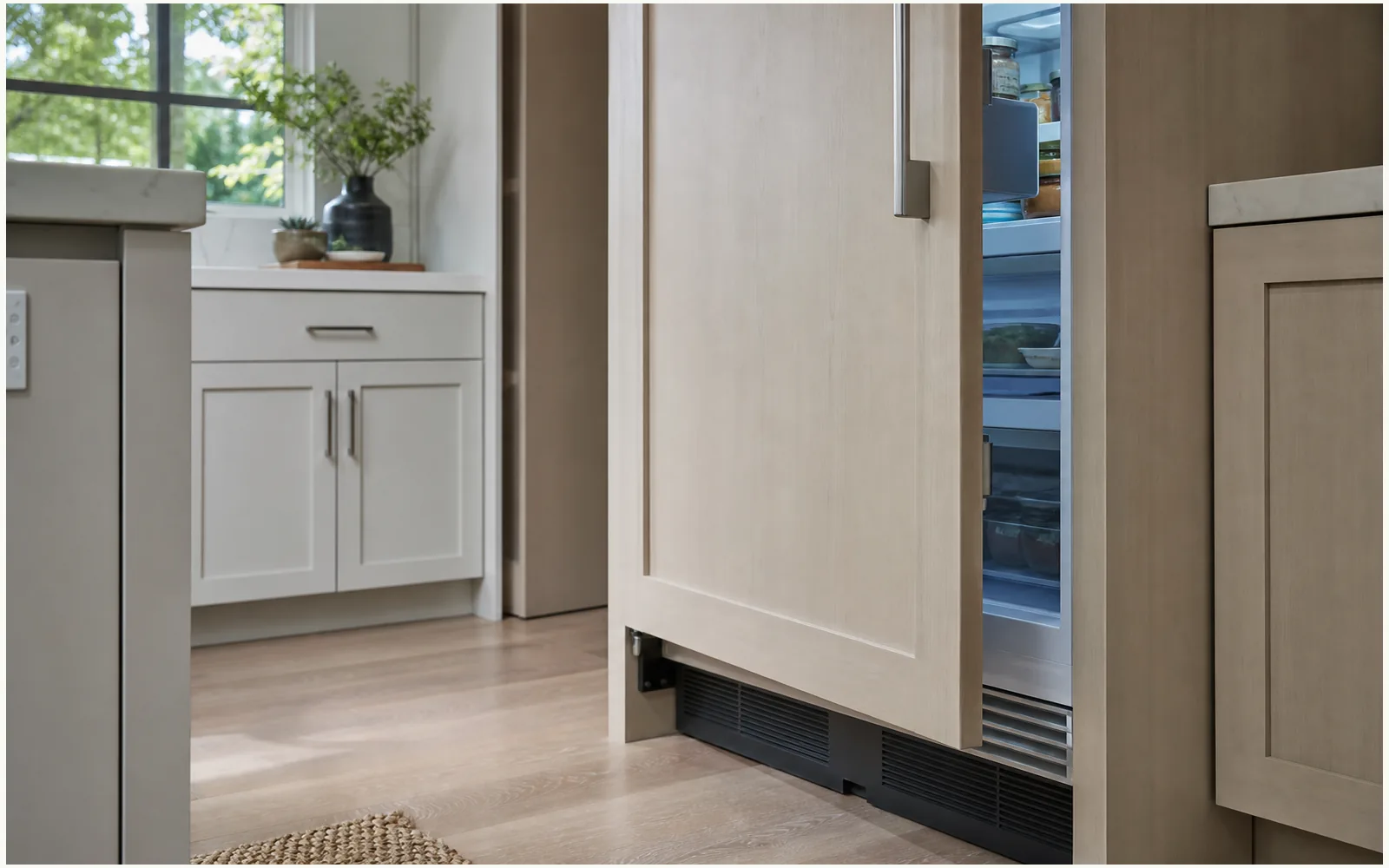
Few towns wear their mid-century architecture as proudly as Los Altos. The tracts Joseph Eichler built around the Highlands, Sylvan Park and the streets off Springer and Cuesta gave the city one of the largest concentrations of these post-and-beam homes anywhere in the country, and the people who own them tend to remodel with the original spirit intact — clean lines, flat planes, and appliances that vanish into the cabinetry rather than announce themselves. That last part is where a built-in Sub-Zero meets the Eichler, and it is why servicing one of these refrigerators is a genuinely different job here than it is in a conventional two-story home.
Why the atrium kitchen changes the service call
The classic Eichler floor plan wraps living space around a central atrium, and the kitchen often opens straight onto it with a galley or peninsula layout. That openness is the charm, but it means a built-in refrigerator usually sits in a run of cabinetry with limited side clearance and a sight line into the main living area. A panel-ready Sub-Zero column or over-under, fronted to match the cabinets, is the natural fit — and pulling one forward for service has to be done without scuffing the very millwork that makes the room work.
We plan for that before we arrive. Knowing a home is an Eichler tells us to bring floor protection sized for a tight galley, to expect a flush install with little room to either side, and to budget time for a careful, square pull-out rather than a quick yank. The repair itself may be routine; the staging around it rarely is.
Slab floors, flat roofs, and where the utilities run
Eichlers sit on a concrete slab, frequently with radiant heating cast into it, and they wear the famous low-slope or flat roof. Both facts shape a refrigerator service. On a slab there is no crawlspace to route a water line through, so the supply and any drain run along the slab or through the cabinetry — which matters enormously when the symptom is a leak, because water tracks sideways across a slab and can surface a yard from its source. The flat roof and the slab also mean the kitchen's ventilation and clearances were designed tightly, so a built-in's airflow has less margin than in a roomier modern kitchen.
That tight margin is exactly why the dry, dusty Los Altos summer is hard on these units. A condenser pulling warm garden air through a flush install in a compact Eichler kitchen loads up faster and sheds heat with less room to spare, so the annual coil cleaning earns its keep here more than almost anywhere.
Integrated columns and mid-century cabinetry
When an Eichler kitchen is remodeled to current taste, the favorite move is the integrated Sub-Zero column — a refrigerator or freezer that disappears entirely behind a flat door front matched to the cabinets. It is the most Eichler-appropriate refrigeration there is, and it is also the most demanding to service, because the custom door front, the hinges and the panel hardware all have to come off and go back on perfectly. A part swap that takes an hour on a freestanding fridge becomes a careful sequence of disassembly and reassembly that protects a finish you cannot simply replace.
The original mid-century cabinetry, where it survives, asks for the same respect. Slab-front doors, thin reveals and period hardware do not tolerate a careless tool. We treat the cabinetry as part of the appliance, because in an Eichler it effectively is.
What we bring to an Eichler service
An Eichler call gets the same diagnosis-first approach as any built-in, with a few additions. We come prepared to pull a flush unit in a tight galley without marking the millwork, to trace a leak across a slab rather than assume the puddle marks the source, and to handle an integrated column's door front and hinges as carefully as the refrigeration inside. We read the model and serial first so the right parts ride along, and we keep the work to the smallest repair that solves the problem.
There is nothing to fill out and no email tag: the $89 diagnostic applies to the repair, the work carries a 365-day warranty, and you reach a specialist by calling (650) 668-1043 or booking online. If your Eichler's Sub-Zero is leaking, warming or making a new noise, those symptom pages walk through the specifics — and every one of them ends at the same place, a careful visit that leaves both the appliance and the house better than it found them.