 Los Altos Sub-Zero Appliance Repair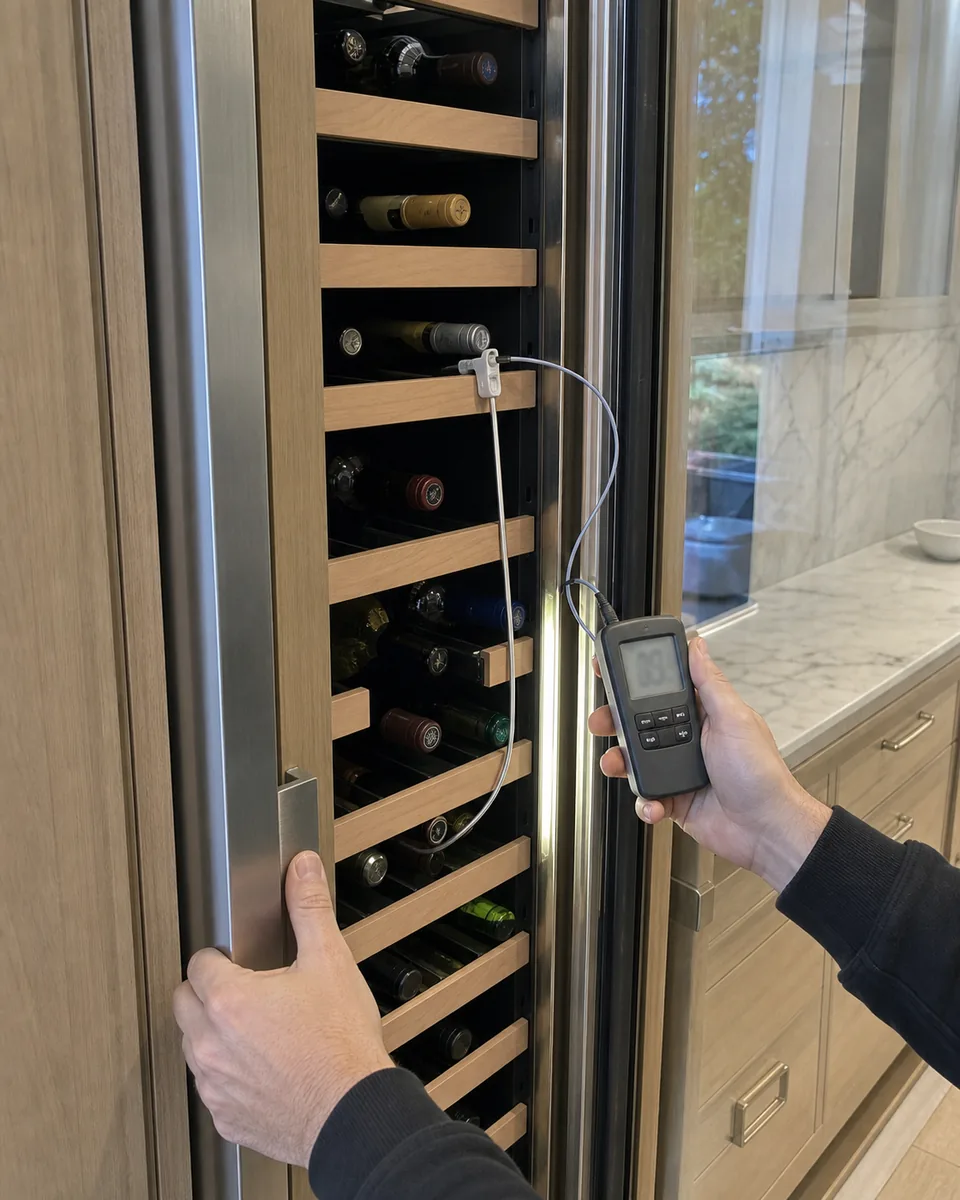
The call usually starts the same way: a collector in Old Los Altos or up in the Hills notices the wine column reading a degree or two off, then three, then the upper zone won't come back down at all. A Sub-Zero wine unit is a sealed refrigeration appliance built for stability, and when it slips, the fix is rarely mysterious — it's one of a handful of known faults, diagnosed against real readings rather than guesswork. Here is what we open these units up and find.
Warm drift and the dual-zone sensor
The most frequent repair on a Sub-Zero wine column is a warm drift that owners catch on the cabinet display before they catch it in the glass. On a dual-zone unit each compartment has its own thermistor reporting to the control board, and a sensor that has begun reading high will tell the system the zone is colder than it really is — so the compressor under-runs and the wine sits warmer than the setpoint. Replacing a drifted thermistor is a bounded, OEM-part repair, but the trick is confirming it's the sensor and not the board that's misreading. We log the actual zone temperature against what the unit thinks it's doing before we touch a part.
The sealed system, the fan, and airflow
Behind the temperature is the sealed system — compressor, condenser and evaporator moving heat out of the cabinet. Two everyday culprits load it up in a Los Altos kitchen. The first is a condenser caked with the fine garden dust that the long dry valley summer drives indoors; a loaded coil can't shed heat, the compressor runs long and hot, and the zones drift together. The second is a failing evaporator fan — when airflow across the cold coil weakens, cold air pools instead of circulating and one shelf reads colder than another. Both are repairable without touching the refrigerant; a genuine compressor or refrigerant leak is the rarer, costlier end of the range, and we show you the gauge readings before ever calling it that.
Seals, UV glass and vibration
Wine storage asks for things a food fridge never does. The door gasket has to hold a steady humidity band, and the dry Los Altos air ages that rubber faster than coastal towns see — a gasket that has hardened lets warm room air leak in and the unit fights it all afternoon. The tinted UV glass and its seal matter too, since a collection in a sunlit dining room is being protected from light as much as heat. And vibration is a quiet repair flag: a worn compressor mount or a fan bearing buzzing through the cabinet disturbs sediment in bottles meant to rest still for years. We check the gasket, the glass seal and for abnormal vibration on every wine-unit visit, because these are exactly the faults that ruin storage long before the display admits there's a problem.
Repair or replace, honestly
Most wine-cooler faults we see in Los Altos are worth repairing: a sensor, a fan, a gasket or a coil cleaning restores a sound cabinet for a fraction of replacement, and a built-in column is plumbed and finished into the cabinetry in a way that makes swapping it a far bigger job than the part. The exception is an older unit facing a major sealed-system repair — there, we put the numbers in front of you and sometimes say replacement makes more sense. Every visit opens with our $89 diagnostic that applies to the repair, the work carries a 365-day warranty, and there's nothing to fill out: you call (650) 668-1043 or book online and a specialist comes to the house.