Home / Guides / Keeping a Sub-Zero wine cellar steady in a Los Altos home
Wine storage guide · 6 min read
Keeping a Sub-Zero wine cellar steady in a Los Altos home
Temperature swings, humidity and a warm valley climate are what threaten a Sub-Zero wine unit in Los Altos. How to keep a collection's storage rock-steady.
A lot of Los Altos homes treat wine storage as seriously as the kitchen itself — built-in Sub-Zero wine columns and dual-zone units tucked into butler's pantries, dining rooms and the lower levels of the larger Los Altos Hills properties. Unlike a food refrigerator, a wine unit is judged on stability, not just cold, and the warm dry valley climate puts that stability under steady pressure.
Stability is the whole job
Wine doesn't mind a precise number nearly as much as it minds change. A Sub-Zero wine unit holds a tight temperature and a humidity band so corks stay sealed and the wine ages slowly. In Los Altos the threat is the warm ambient swing — a pantry that drifts from a cool morning to a hot afternoon makes the unit cycle harder to defend its setpoint, and a tired part shows up as a creeping zone temperature long before anything looks obviously wrong.
What we see go first
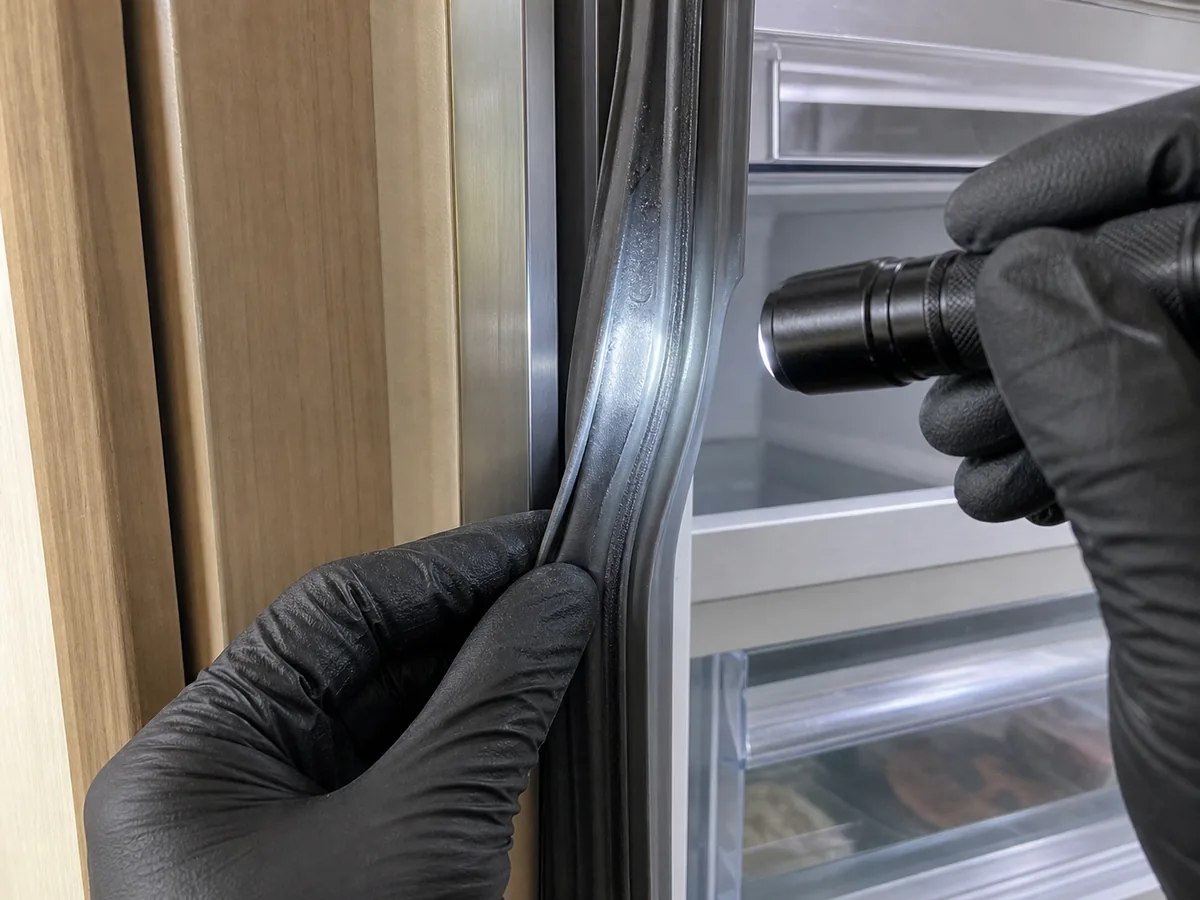
On wine units the usual suspects are a drying door gasket, a struggling evaporator fan, and condenser loading from the same garden dust that troubles the kitchen refrigerator. Dual-zone cabinets add a second evaporator, so a fault can show as one zone holding fine while the other drifts. Because the symptom is gradual, an external thermometer in the cabinet is the single best early-warning tool a collector can keep.
Placement and prevention
Give the unit real air clearance, keep it out of a sunny window line, and don't wedge it into an enclosed cabinet with no ventilation — the warm Los Altos afternoons make a cramped install work far harder than it should. An annual check of the gasket seal, the airflow and each zone's actual temperature keeps a collection's storage honest. If a zone has begun to wander, we diagnose against real readings before recommending a part, because on a wine unit the wrong guess can mean weeks of subtly bad storage.
Visible Q&A
Questions & answers
Why is one zone of my dual-zone Sub-Zero warmer than it should be?
Each zone has its own evaporator and airflow, so a drift in only one zone usually points to that zone's fan, sensor or a localized airflow blockage rather than the whole unit. It is worth diagnosing promptly because the symptom creeps in slowly.
Does Sub-Zero make the wine storage and the refrigerator?
Yes — Sub-Zero builds the built-in refrigeration and wine-storage units. Wolf, its sister brand, builds the cooking equipment. We service both.
 Los Altos Sub-Zero Appliance Repair